Blueprint · Historical Fiction
Explore →Historical Fiction: Case Study Book | ArteBook
Build a Historical Fiction case study book (70–115 pages) in ArteBook Studio with live co-authoring, voice dictation, and KDP/EPUB exports.
Complete production blueprint for planning, co-authoring, illustrating, and publishing a 60–120 pages Historical Fiction standard operating procedure handbook for book-club readers & period-drama enthusiasts.
| Blueprint Specification | Recommended Historical Fiction Target | How ArteBook Studio Delivers It |
|---|---|---|
| Target Readership | book-club readers & period-drama enthusiasts | Tailors chapter tone, vocabulary depth, and practical examples across every section. |
| Ideal Length & Structure | 60–120 pages (7–11 playbooks) | Idea-to-Book blueprint plans non-overlapping chapters before drafting prose. |
| Trim Size & Page Geometry | A4 / Internal Digital | Automatic mirrored margins, running headers, table of contents, and print bleed. |
| Must-Have Authority Elements | archived period research notes, timeline checks & authentic dialogue | Insert numbered tables, diagrams, equations, callout boxes, and verified DOI citations. |
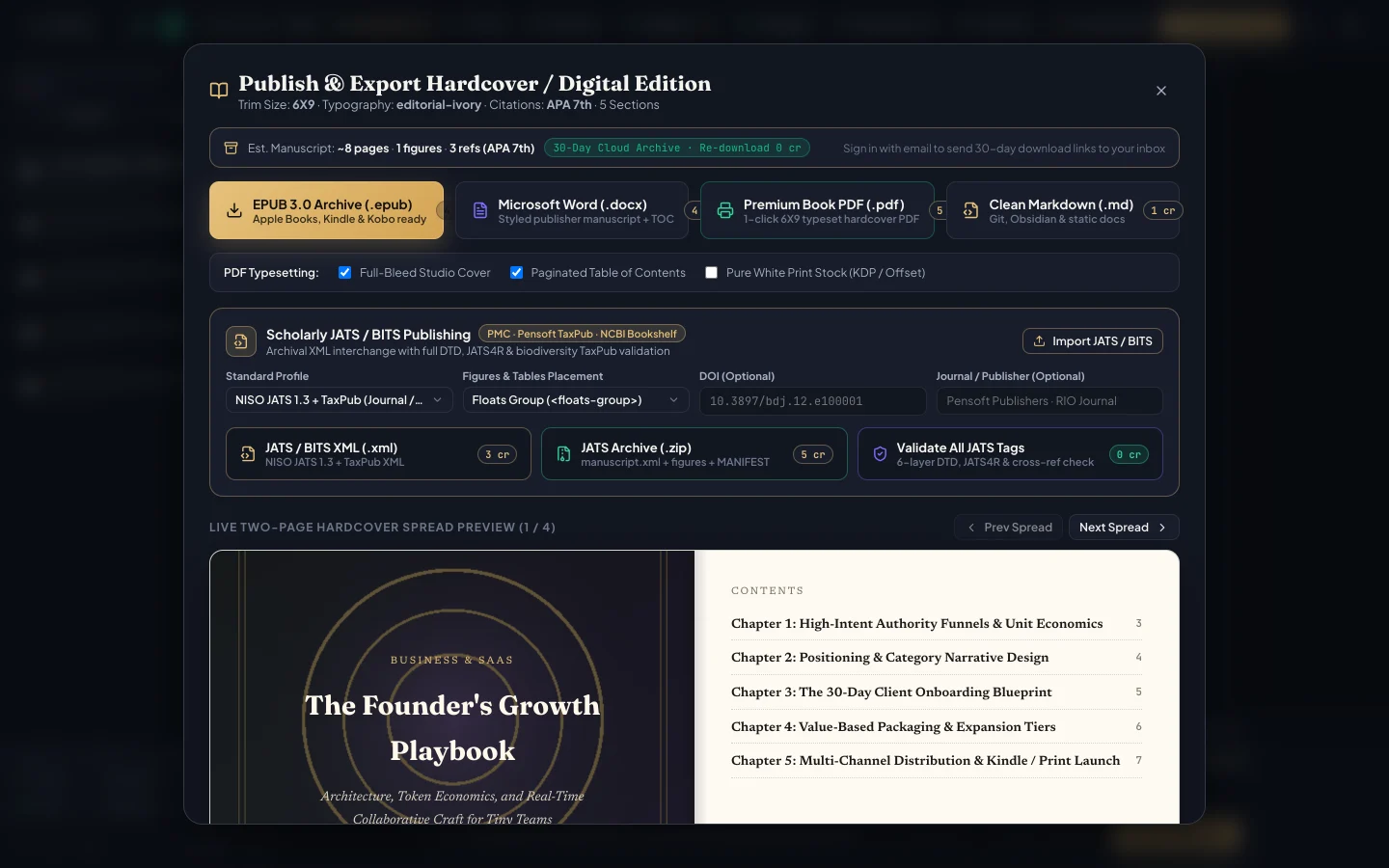
| Primary Export Artifacts | PDF + Editable DOCX | One-click Print PDF, Reflowable EPUB 3.0, Word DOCX, JATS XML + 30-day cloud links. |
| Distribution & Pricing Benchmark | $5.99 Kindle / $16.99 Ivory Paperback (Internal Team Onboarding & Operations) | 100% commercial publishing rights and royalty retention on Creator ($14.99/mo)+. |
| Typical AI Credit Runway | 160–290 credits (with upfront preview) | Fits comfortably inside one month of Creator ($14.99/mo, 600 credits). |
Readers in historical fiction (book-club readers & period-drama enthusiasts) judge a standard operating procedure handbook within the first ten pages. The most common reason manuscripts in this category underperform is modern idioms slipping into dialogue or research lecturing the plot. Instead of padding chapters with generic definitions, anchor your opening two chapters around a sharp diagnostic thesis—showing the reader exactly where conventional approaches break down and mapping the measurable transformation ahead.
Across the middle chapters of your 60–120 pages manuscript, pair every core principle with archived period research notes, timeline checks & authentic dialogue. Close the final two chapters with an implementation roadmap, troubleshooting FAQ, and clear next-step resources tailored for Internal Team Onboarding & Operations (where strong titles regularly command $5.99 Kindle / $16.99 Ivory Paperback).
Inside ArteBook Studio, you never start from a cold, generic prompt. Upload your existing historical fiction research PDFs, client Word documents, clinical or technical notes, or reference images directly into the AI Co-Author dock—or tap the microphone to dictate authentic case stories in any of 59 supported languages from your desktop, tablet, or phone. Every AI outline, expansion, or tone pass displays an upfront credit estimate (160–290 credits typical for a complete sop team handbook) before you click.
When subject-matter peers, ghostwriters, or developmental editors join the project, invite them from your Author Dashboard with per-chapter editing permissions. Collaborators write simultaneously in real time, review redlines with Track Changes (accept or reject edits), pin inline comments to highlighted passages, search verified academic or industry papers by keyword or DOI (APA, MLA, Chicago, Harvard, IEEE, Vancouver), and save milestone version snapshots.
Before exporting, toggle between Obsidian Atelier dark mode and warm Paper reading mode—and run book-wide Find & Replace to verify consistent terminology across all 7–11 playbooks. Preview your 3D cover directly inside the catalog dashboard to confirm title legibility at thumbnail scale.
With one click, generate PDF + Editable DOCX engineered for Internal Team Onboarding & Operations: Print-Ready PDF (A4 / Internal Digital with proper gutter margins, running headers, linked table of contents, and bleed for Amazon KDP and IngramSpark), Reflowable EPUB 3.0 for Kindle, Apple Books, and Kobo, editable Microsoft Word (.docx), or Validated JATS XML—plus automatic 30-day cloud download links emailed to reviewers or buyers. Start free on Starter Studio ($0) or unlock 600 monthly credits and full commercial rights on Creator ($14.99/mo).
For book-club readers & period-drama enthusiasts, the sweet spot is 60–120 pages organized into 7–11 playbooks at A4 / Internal Digital, incorporating archived period research notes, timeline checks & authentic dialogue so readers get immediate, actionable depth.
Outlining and co-authoring a 60–120 pages Historical Fiction manuscript typically uses 160–290 credits—well within the 600 monthly credits included in the $14.99/mo Creator plan, with upfront credit estimates shown before every step.
Yes. Invite collaborators with per-chapter permissions, review edits via Track Changes and inline comments, and export PDF + Editable DOCX with 100% commercial royalty ownership.
Build a Historical Fiction case study book (70–115 pages) in ArteBook Studio with live co-authoring, voice dictation, and KDP/EPUB exports.
Build a Historical Fiction exam study guide (130–210 pages) in ArteBook Studio with live co-authoring, voice dictation, and KDP/EPUB exports.
Build a Historical Fiction illustrated guide (48–96 pages) in ArteBook Studio with live co-authoring, voice dictation, and KDP/EPUB exports.
Build a Historical Fiction training manual (85–150 pages) in ArteBook Studio with live co-authoring, voice dictation, and KDP/EPUB exports.
Build a Romance & Contemporary journal manuscript (18–36 pages) in ArteBook Studio with live co-authoring, voice dictation, and KDP/EPUB exports.
Build a Young Adult Adventure illustrated guide (48–96 pages) in ArteBook Studio with live co-authoring, voice dictation, and KDP/EPUB exports.
How course creators export Validated JATS XML for scholarly journals in ArteBook Studio using Track Changes, voice dictation, and KDP exports.
What Leading means in book publishing and KDP: key formatting specs, pitfalls, and how ArteBook Studio automates it.